
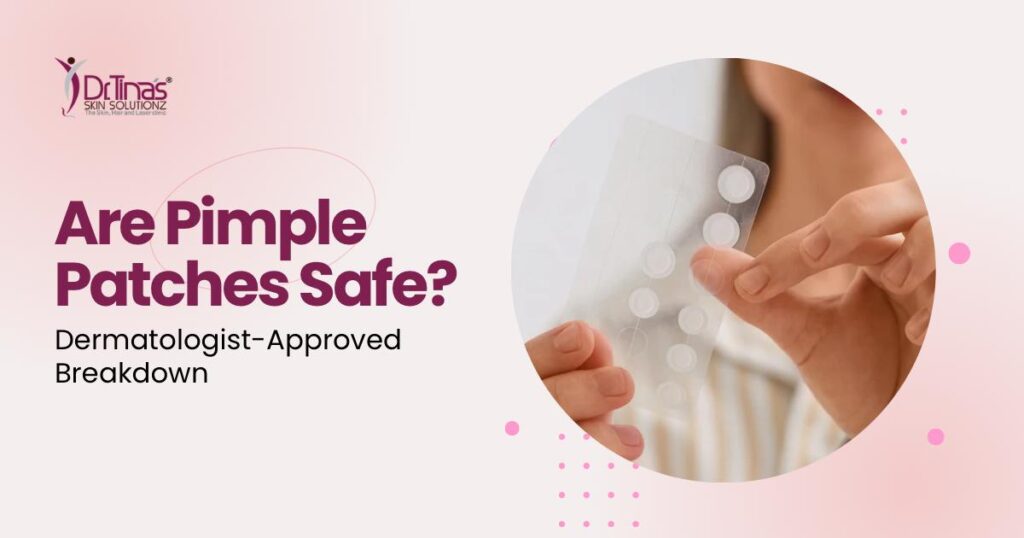
Are Pimple Patches Safe? A Dermatologist-Approved Breakdown
A Dermatologist’s Honest Take (No Hype, No Fear)
Let me start with a confession.
I know exactly why pimple patches are so popular — because almost every patient who sits across from me has tried one.
Teenagers. Working professionals. Brides a week before their wedding.
Even people who swear they “don’t follow skincare trends.”
And honestly?
I don’t blame them.
There is something oddly comforting about sticking a tiny patch on a pimple and waking up to see that white dot staring back at you. It feels like proof that something worked.
But here’s the real question most people never ask:
Are pimple patches actually safe for your skin — or are we just trading one problem for another?
Let’s talk about it. Calmly. Honestly. Dermatologist to human.
Why Pimple Patches Became Everyone’s Favourite Fix
Pimple patches didn’t go viral because they’re cute (though the star-shaped ones help).
They went viral because they solve three very real struggles:
• They stop you from touching your face
• They stop you from picking (or popping)
• They make you feel like you’re in control again
If you’ve ever promised yourself “I won’t touch it” — and then caught yourself doing exactly that five minutes later — you get it.
A patch creates a physical boundary.
And for many people, that alone is a big win.
But skincare isn’t just about what feels good in the moment.
It’s about what your skin can tolerate over time.
What Pimple Patches Really Are (Stripped of Marketing)
Most pimple patches are made from hydrocolloid.
This isn’t a trendy ingredient.
It’s something doctors have used for decades to heal wounds.
Hydrocolloid works by:
• Absorbing fluid from the pimple
• Keeping the area slightly moist (which helps healing)
• Acting like a protective cover against dirt, bacteria, and fingers
In simple words?
It helps a surface pimple heal quietly, without interference.
Some newer patches add ingredients like salicylic acid, niacinamide, or tea tree oil. These can help — but they also increase the chance of irritation if your skin is sensitive.
Not All Pimple Patches Are the Same
This part matters more than people realise.
1. Plain Hydrocolloid Patches
These are the simplest and safest.
Best for:
• Whiteheads
• Recently popped pimples
• Sensitive skin
If you’re unsure which patch to use, start here.
2. Medicated Patches
These contain active ingredients.
They can work well — but:
• They can dry your skin
• They can irritate compromised skin
• They’re not meant for long wear
Good for oily, resilient skin.
Not ideal if your skin reacts easily.
3. Microneedle (Micro-dart) Patches
Designed for those deep, painful pimples that haven’t surfaced yet.
They deliver ingredients slightly under the skin.
Helpful in some cases — but not for everyone.
I’ve seen them cause unnecessary inflammation when overused.
So… Are Pimple Patches Safe?
For most people?
Yes — when used correctly.
In fact, the biggest benefit has nothing to do with ingredients.
The real benefit is this:
They stop you from picking.
And picking is one of the most common reasons I see:
• Secondary infections
When people stop touching their acne, skin outcomes improve — almost immediately.
That said, no product is perfect.
Possible Side Effects (That No One Talks About)
Most side effects are mild, but they do happen:
• Temporary redness after removal
• Dry or flaky skin
• Patch-shaped irritation from the adhesive
Occasionally, someone develops an allergy to the adhesive — especially if they already react to Band-Aids or tapes.
If a red, itchy outline stays longer than the pimple did, that’s your sign to stop.
When Pimple Patches Are a Bad Idea
This is important.
Pimple patches do NOT work for everything.
Avoid them if you have:
- Cystic or painful acne – These are deep. There’s nothing for the patch to absorb.
- Infected or heavily inflamed lesions – Covering an infection without treatment can make things worse.
- Known adhesive allergies – You’ll end up treating irritation instead of acne.
A patch is not a substitute for medical treatment.
Do Pimple Patches Treat Acne — Or Just the Pimple?
Here’s the honest answer I give patients: They treat the pimple, not the condition.
They’re great for:
• Flattening a whitehead
• Reducing redness overnight
• Protecting healing skin
But they won’t:
• Prevent future breakouts
• Balance hormones
• Fix clogged pores across your face
If you rely only on patches, acne becomes a never-ending game of spot treatment.
Ingredient Red Flags to Watch For
Be cautious if a patch contains:
• Strong salicylic acid (especially under occlusion)
• Retinoids (higher risk of irritation)
• Fragrance or dyes (no benefit, higher allergy risk)
When it comes to pimple patches, simpler is safer.
How to Use Pimple Patches Without Harming Your Skin
- Apply only on clean, dry skin
- Use them on visible whiteheads (not deep lumps)
- Leave them on until they turn opaque
- Remove slowly — never rip
Aggressive removal can damage healing skin and trigger pigmentation.
A Special Note for Indian & Melanin-Rich Skin
This deserves attention.
In darker skin tones:
• Trauma can lead to pigmentation
• But picking causes far more pigmentation than patches
So yes — pimple patches are generally helpful.
Just be gentle while removing them.
My Final Dermatologist’s Verdict
Use pimple patches for:
• Single whiteheads
• Surface pimples
• Breaking the picking habit
Be cautious if:
• You have sensitive skin
• You’re using prescription retinoids
Skip them if:
• Acne is painful, deep, or scarring
At that point, stickers aren’t the solution.
Professional care is.
If acne is recurring or leaving marks, clinics like Skin Solutionz focus on treating acne at its root — not just covering it.
One Last Thought
Pimple patches aren’t magic.
But used thoughtfully, they’re one of the least harmful trends we’ve seen in skincare.
Just remember:
They’re a support tool — not a treatment plan.

Dr.Tina Ramachander is one of the best dermatologist in Bangalore and Medical Director at Dr.Tina’s Skin Solutionz, a skin care clinic in Bangalore. She completed her master’s in dermatology from the well acclaimed JJM Medical college in Karnataka and is now a practicising dermatosurgeon and Medical Cosmetologist in Bangalore.