
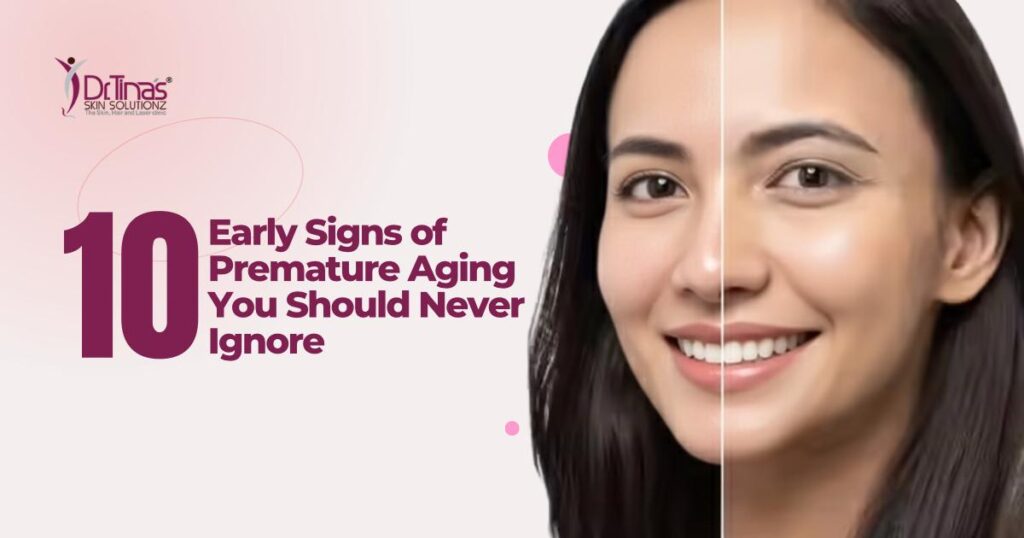
10 Early Signs of Premature Aging You Should Never Ignore
Premature Aging Can Start Earlier Than You Think
Many people believe aging begins in their 40s or 50s. In reality, premature aging can start as early as your 20s and 30s especially due to sun exposure, stress, poor sleep, and lifestyle factors.
Premature aging happens when your skin’s collagen, elasticity, and natural repair processes weaken faster than normal. This leads to visible changes like fine lines, pigmentation, dullness, and sagging. The good news? Early detection allows effective prevention and treatment and recognizing these signs early can help preserve healthy, youthful skin for years.
Table of Contents
What Causes Premature Aging of Skin?
These are the most common culprits that accelerate collagen breakdown and reduce skin regeneration:
- Sun exposure (UV damage accounts for up to 90% of visible aging)
- Chronic stress
- Poor sleep quality
- Pollution and oxidative stress
- Poor nutrition
- Hormonal imbalance
- Skin barrier damage
- Chronic inflammation
10 Early Signs of Premature Aging Skin
1. Fine Lines Appearing at a Young Age
Fine lines around the eyes and mouth are often the first visible sign of premature aging. They develop due to collagen breakdown caused by UV exposure and oxidative stress. Early treatment can significantly slow their progression.
2. Uneven Skin Tone and Pigmentation
Sunspots, patchy skin tone, and pigmentation develop when UV exposure triggers excess melanin production. These changes make skin appear older and less healthy — even in your 20s.
3. Loss of Skin Elasticity
Healthy skin snaps back quickly when stretched. Reduced elasticity signals weakening elastin fibers and, over time, leads to early sagging.
4. Dull and Tired-Looking Skin
Dullness results from slowed cellular turnover. Dead skin cells accumulate, stripping skin of its natural glow, making it appear much older than it actually is.
5. Enlarged Pores
As collagen support weakens, pores lose their structural backing and appear more visible. Enlarged pores are often one of the earliest signs of collagen loss.
6. Dark Circles and Hollow Under-Eyes
Thinning under-eye skin makes blood vessels more visible, creating dark circles and a hollow appearance. This is a common, and frequently overlooked – early aging indicator.
7. Persistent Dryness
Chronic dryness points to skin barrier damage. A weakened barrier reduces moisture retention, accelerates aging, and increases sensitivity over time.
8. Early Sagging of the Jawline or Cheeks
Loss of collagen and fat support leads to subtle sagging or reduced facial firmness. Early intervention can significantly improve skin structure before this becomes pronounced.
9. Slow Skin Healing
If acne marks or minor injuries take longer than usual to fade, your skin’s regeneration capacity is declining; a clear sign of aging at the cellular level.
10. Increased Skin Sensitivity and Inflammation
Chronic inflammation accelerates collagen breakdown. Reactive or sensitive skin is often an early warning sign of premature aging and needs to be addressed proactively.
How Dermatologists Diagnose Premature Aging
A dermatologist evaluates premature aging using:
- Dermoscopy for detailed skin analysis
- Clinical skin examination
- Skin biopsy (when necessary)
- Lifestyle and medical history evaluation
This helps identify root causes and create a personalized treatment plan tailored to your skin.
How to Prevent Premature Aging Skin
1. Use Sunscreen Daily
Broad-spectrum SPF 30 or higher is non-negotiable. Sunscreen prevents collagen breakdown and pigmentation; and remains the single most effective anti-aging step you can take.
2. Use Proven Anti-Aging Ingredients
Dermatologist-recommended ingredients to look for:
- Retinoids — stimulate collagen production
- Vitamin C — neutralizes oxidative damage
- Hyaluronic acid — boosts hydration and plumpness
- Peptides — support skin repair and firmness
3. Maintain Healthy Lifestyle Habits
Skin health is a direct reflection of overall body health. Key habits include:
- Adequate sleep (7–9 hours)
- Balanced, nutrient-rich nutrition
- Stress management practices
- Proper daily hydration
Advanced Dermatology Treatments for Premature Aging
For those looking beyond skincare, clinical treatments that safely and effectively restore skin health include:
- Microneedling — stimulates collagen production
- Laser treatments — targets pigmentation and rejuvenates skin texture
- PRP therapy — promotes natural skin regeneration
- Medical-grade skincare protocols — customized to your skin type and concerns
When Should You See a Dermatologist?
Don’t wait for signs to worsen. Book a consultation if you notice:
- Early fine lines or wrinkles
- Persistent pigmentation or sunspots
- Skin dullness, sagging, or loss of firmness
- Chronic dryness or increased sensitivity
Early treatment consistently delivers the best long-term results.
Expert Anti-Aging Treatment in Bangalore
At Dr. Tina’s Skin Solutionz, Bangalore, personalized dermatology treatments address premature aging at its root cause. Every treatment plan is built on detailed skin analysis, lifestyle evaluation, and individual skin needs with a focus on long-term skin health, not just temporary improvement.
Based in Bangalore | Serving patients across the city
The Bottom Line
Premature aging is not just about how old you are; it reflects how your skin responds to environmental stress and internal health. Recognizing early signs gives you the power to act before changes become harder to reverse. With the right care and expert dermatological guidance, healthy, youthful skin is well within reach.
Frequently Asked Questions
Q1. At what age does premature aging start?
Premature aging can begin as early as your mid-20s, particularly if you have high UV exposure, chronic stress, poor sleep, or an unhealthy diet. While natural aging typically becomes visible in the 40s, premature aging accelerates these changes a decade or more earlier.
Q2. What are the first signs of premature aging?
The earliest signs include fine lines around the eyes and mouth, uneven skin tone, dullness, enlarged pores, and loss of skin elasticity. Dark circles, persistent dryness, and slow healing of acne marks are also common early indicators.
Q3. What is the main cause of premature skin aging?
Sun exposure (UV radiation) is the single biggest cause, responsible for up to 90% of visible skin aging. Other major contributors include chronic stress, pollution, poor nutrition, hormonal imbalance, and skin barrier damage.
Q4. Can premature aging be reversed?
While aging cannot be completely reversed, early intervention with dermatologist-recommended treatments — such as retinoids, vitamin C, microneedling, laser therapy, and PRP — can significantly reduce visible signs and restore skin health.
Q5. How can I prevent premature aging naturally?
Key preventive habits include applying broad-spectrum SPF 30+ sunscreen daily, staying hydrated, getting 7–9 hours of sleep, eating an antioxidant-rich diet, managing stress, and using proven skincare ingredients like retinoids, peptides, and hyaluronic acid.
Q6. Is premature aging permanent?
Premature aging is not entirely permanent. With early detection, consistent skincare, lifestyle changes, and clinical treatments, visible improvements in skin texture, tone, and firmness are achievable. The earlier you act, the better the outcome.
Q7. When should I see a dermatologist for premature aging?
You should consult a dermatologist if you notice early fine lines, persistent pigmentation, skin dullness, reduced firmness, or chronic dryness — especially if these appear before your late 30s. Early treatment delivers the most effective and lasting results.
Q8. What treatments do dermatologists recommend for premature aging?
Dermatologists may recommend a combination of medical-grade skincare (retinoids, vitamin C serums), clinical procedures like microneedling, laser treatments, and PRP therapy, along with a personalized skincare protocol based on your skin type and lifestyle.

Dr.Tina Ramachander is one of the best dermatologist in Bangalore and Medical Director at Dr.Tina’s Skin Solutionz, a skin care clinic in Bangalore. She completed her master’s in dermatology from the well acclaimed JJM Medical college in Karnataka and is now a practicising dermatosurgeon and Medical Cosmetologist in Bangalore.