
Pigmentation Around Mouth: Causes, Treatment and Prevention
Do you have pigmentation around your mouth? Tried all home remedies and skin brightening creams, yet no results?
Pigmentation around the mouth is one of the most common skin concerns seen in Indian men and women. It appears as patchy darkness or uneven tone near the lips and chin, often triggered by sun exposure, hormones, or irritation from skincare products. While it isn’t harmful, it can affect confidence and be slow to fade without the right approach. This guide explains the real causes, dermatologist-approved treatments, and daily preventive steps to restore even, healthy skin.
Do’s & Don’ts to Prevent Irritation and Worsening Pigmentation
Do’s
✅ Use a gentle, non-foaming cleanser twice daily to maintain your skin’s natural barrier.
✅ Apply dermatologist-recommended brightening actives such as niacinamide, arbutin, or tranexamic acid at low concentrations (start slow and build gradually).
✅ Keep the skin well moisturized, especially after peels or topical treatments, to reduce inflammation.
✅ Always patch test new products on a small area before full use.
Don’ts
❌ Avoid harsh scrubs, fragrance-heavy creams, or strong DIY acids (like lemon, vinegar, or toothpaste). These can trigger irritant dermatitis and worsen pigmentation.
❌ Do not layer multiple actives (like retinol, vitamin C, and exfoliants) without supervision. This can over-exfoliate the delicate peri-oral skin.
❌ Avoid frequent product switching, give each routine at least 6–8 weeks to show results.
Causes of Pigmentation around Mouth
Pigmentation occurs when your skin has excessive melanin (the pigment in your skin that gives it colour) production and deposition. Take a look at the main causes of pigmentation.
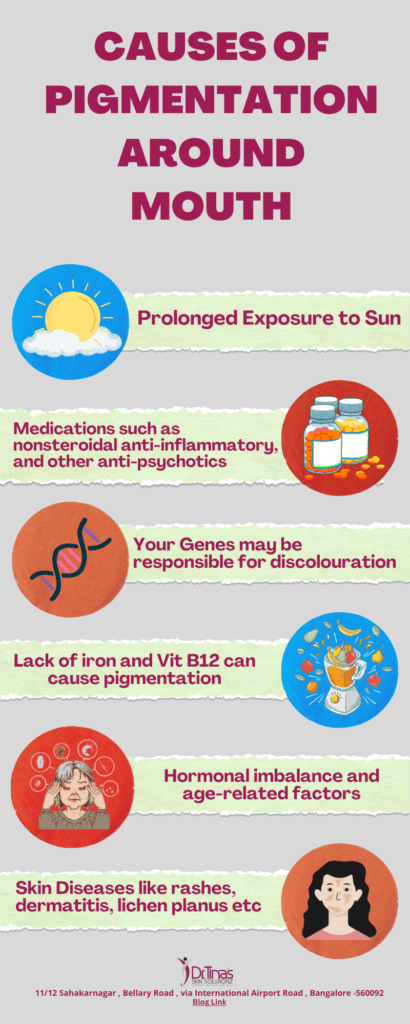
- Prolonged Exposure to the Sun – Pigmentation on your face and body can be due to you being outdoors in natural light. Your skin reacts with prolonged sun exposure and produces excessive melanin. The production of melanin is your body’s way of protection against sun damage from the UV rays. However, it can lead to tanning.
- Hormonal Imbalance & Age Related Factors – Many people experience pigmentation as a result of imbalance in their hormonal functions. Particularly for women, pigmentation around the mouth is commonly noticeable during pregnancy, or when undergoing hormone replacement therapy. You may also notice discolouration if you are on birth control pills. Among many people undergoing pigmentation treatment in Bangalore, age-related factors are often seen playing a role in changing the pigmentation of skin, causing age-spots. These are further triggered by exposure to sunlight.
- Medications – Darkening of skin around the mouth can be because of the side-effects of other medications that you take. Although it varies from skin type and person to person, prescribed drugs such as nonsteroidal anti-inflammatory, anti-malarials and other anti-psychotics can cause major pigmentation issues on your face.
- Genetic – Another internal factor, your genes may also be responsible for skin discolouration. Like several other conditions, pigmentation can also be hereditary. Pigment demarcation lines can run in families and appear more with hormonal changes.
- Nutrition – Lack of iron and vitamin B12 in the body also leads to pronounced pigmentation around mouth.
- Sensitive skin and diseases – Usage of many creams, trial and errors of skin care can lead to rashes and irritability.That in turn leads to skin pigmentation. Also skin diseases like atopic dermatitis, perioral dermatitis, lichen planus can cause pigmentation around mouth.
Treatment of Pigmentation
The issue of pigmentation is addressed by several treatments, depending on the causes and extent.
- Topical Agents – Typically, for pigmentation of low to moderate extent, topical agents are prescribed by dermatologists. Medicated, drugstore or over the counter products with certain ingredients such as vitamin c, arbutin, niacinamide tranexamic acid, hydroquinone, retinol have been found effective on discolouration. These agents can be in the form of creams, gels and other applicables. Although there are several other agents like linoleic acid, rucinol, mulberry extract oil and so on, they do not offer as effective results for hyperpigmentation.
How to Safely Layer Brightening Actives (Topical Laddering Guide) Each active ingredient works differently on melanin pathways. Start slow, layer wisely, and let your skin adjust.
| Ingredient | Recommended Strength | When to Use | Purpose / Notes |
| Niacinamide | 4–5% | AM & PM | Strengthens barrier, reduces melanin transfer |
| Tranexamic Acid | 2–5% | PM | Reduces inflammation & melanin synthesis; great for melasma |
| Hydroquinone | 2–4% (under supervision) | PM | Potent melanin inhibitor; limit to ≤3 months continuous use |
| Retinoids (Retinol / Tretinoin) | 0.025–0.05% | Night | Boosts cell turnover; use with sunscreen & moisturizer |
| After Peels / Laser | — | Recovery phase | Focus on hydration (ceramide cream + SPF) before restarting actives |
Tip: Introduce only one new active every 2–3 weeks. If you notice redness, stinging, or flaking, pause use and consult your dermatologist.
- Chemical peels – agents with gentle exfoliation, can lead to reduction in pigment and softer brighter skin, commonly used peels include glycolic acid, arginine, retinol peels.
Caution: Perioral Dermatitis Awareness
Redness and bumps around your mouth? It may not be pigmentation. You could be dealing with perioral dermatitis; a skin condition that mimics pigmentation but involves inflammation.
- Avoid:
- Topical steroid creams
- Fluorinated toothpaste
- Heavy or fragranced cosmetics near the lips
These can aggravate the rash and worsen pigmentation.
Persistent irritation or dark patches with redness require professional diagnosis to differentiate dermatitis from hyperpigmentation.
- Mesotherapy with tranexamic acid – Among the popular treatments available for pigmentation reduction is mesotherapy. This treatment includes injecting a solution comprising a blend of vitamins, hormones, enzymes and useful extracts into the mesodermal layer of the skin. Mesotherapy with tranexamic acid has shown exceptional results in treating hyperpigmentation in comparison to other methods. Besides addressing pigmentation issues, this procedure also reduces cellulite, signs of ageing as well as smoothens the skin. No wonder why mesotherapy is also termed as bio-rejuvenation.
- Q-Switched laser for pigment reduction – Laser therapy is among the most effective pigmentation treatments in Bangalore. Q-switched laser treatment employs high-intensity energy beams to penetrate the skin. The energy is absorbed by pigmented areas, which further breaks them down into smaller particles. They are then disposed of by your body, on its own. Q-switched lasers are not only safe but also offer long-term results.
Prevention of Pigmentation
While not all causes of pigmentation can be prevented, some of it definitely can be. Particularly, external causes of getting discoloured skin can be controlled, and therefore, reduced to an extent.
Remember to use mild cleansers to wash face, use lipid barrier repair creams daily twice. usage of the correct products according to the skin type which doesn’t cause irritability is essential for relief from the skin problem.
Eat healthy, if deficient in ferritin or iron content consume more of green leafy vegetables, drum stick leaves or moringa leaves in particular are potent sources of iron.
- Never forget to wear sunscreen – Using sunscreen when outdoors is extremely important to avoid tanning around the mouth. You must wear sunscreen of at least SPF 30, half an hour prior to stepping out. If you stay outside for too long, make sure to reapply every 2-3 hours.
- Switch medications – If you notice the pigmentation started to occur after getting on some medication for any other physical issue, it is best to switch the medications. Consult your doctor about the side effects of such medication and ask for alterations.
- Reduce exposure to the sun – The best way to reduce the risk of getting tanned skin around the mouth area is reducing your time out, in the sun. Make sure you cover your face with cloth wrap or wide brimmed hats to avoid direct exposure to sun. Daily sun protection is your strongest defence against pigmentation.
• Choose a broad-spectrum sunscreen with SPF 30 or higher and PA+++ or more (for UVA/UVB protection).
• Apply half an hour before sun exposure and reapply every 2–3 hours outdoors or every 4–6 hours indoors (especially near windows or screens).
• Ensure full coverage around mouth, chin, and lip folds, where uneven application often causes dark shadows.
• For melasma-prone skin, opt for a tinted mineral sunscreen with iron oxide, which helps block visible light, a key trigger for pigmentation in Indian skin tones.
Tip: Keep a travel-sized sunscreen for reapplication during commutes or lunch breaks.
What to Expect: Timeline & Results
Every pigmentation type fades at a different pace depending on its cause and depth.
Setting the right expectations helps you stay consistent and confident in your routine.
| Pigmentation Type | Expected Improvement Timeline | Best-suitable Treatments | Maintenance Tips |
| Post-Inflammatory Hyperpigmentation (PIH) | 2–3 months with topical agents | Niacinamide, Retinoids, Mild Peels | Barrier repair + SPF |
| Melasma / Hormonal Pigmentation | 3–6 months (gradual) | Tranexamic acid, Peels, Laser + Sunblock | Tinted mineral SPF, gentle skincare |
| Pigmentary Demarcation Lines / Genetic | Slow, partial improvement | Laser toning, Brighteners | Ongoing sunscreen + maintenance creams |
| Medication-Induced Pigmentation | Depends on trigger | Stop / switch drug under medical advice | Review medications with dermatologist |
Note: Pigmentation improvement is gradual, not instant. Avoid expecting overnight lightening, consistency, medical supervision, and sun protection are key.
Remember pigmentation in the indian context takes atleast 3-6 months for recovery with creams. Besides, maintaining a good skincare routine will help reveal the newly generated skin underneath the top-most layer. This way, you may reduce the extent of pigmentation as well. Although discolouration around your mouth is not harmful or life threatening, you must visit a skin expert for the right diagnosis and treatment.
Frequently Asked Questions: Pigmentation Around the Mouth
1. What causes pigmentation or dark skin around the mouth?
Pigmentation around the mouth can result from sun exposure, hormonal changes (such as during pregnancy), post-inflammatory marks, medication side effects, or even nutritional deficiencies like low vitamin B12 or iron. In many Indian skin tones, mild friction or irritation from skincare or toothpaste can also trigger excess melanin production.
2. Is pigmentation around the mouth permanent?
Not necessarily. Most pigmentation can be improved with consistent sun protection, dermatologist-prescribed topical agents, and in-clinic treatments such as chemical peels or laser toning. However, genetic or hormonal pigmentation (like melasma or pigmentary demarcation lines) may require maintenance therapy to prevent recurrence.
3. Which creams or ingredients help lighten pigmentation around the mouth?
Look for dermatologist-approved actives such as:
Niacinamide (4-5%) – reduces melanin transfer
Tranexamic acid (2-5%) – blocks inflammatory pigment triggers
Vitamin C and Arbutin – help brighten dull skin
Hydroquinone (2-4%) – effective for stubborn pigmentation (short-term, under supervision)
Avoid self-medicating or mixing multiple actives without guidance, as this can cause irritation and worsen pigmentation.
4. How long does it take to see results?
It depends on the cause and depth of pigmentation:
Post-inflammatory pigmentation (PIH) – 2–3 months
Hormonal or melasma-related pigmentation – 3–6 months
Genetic or medication-linked pigmentation – variable, may need long-term maintenance
Consistency with sunscreen and prescribed skincare is crucial for visible results.
5. Can sunscreen really help pigmentation around the mouth?
Absolutely. UV and visible light exposure are major triggers for pigmentation.
Use a broad-spectrum sunscreen (SPF 30 or higher, PA+++) daily, even indoors.
For melasma-prone skin, a tinted mineral sunscreen with iron oxide offers added protection against visible light that deepens pigmentation in Indian skin.
6. Are home remedies safe for pigmentation around the mouth?
Many DIY remedies such as lemon juice, toothpaste, or scrubbing can irritate sensitive peri-oral skin and cause post-inflammatory hyperpigmentation (PIH). Dermatologists recommend gentle, barrier-supporting routines with evidence-based actives instead of harsh or unverified home treatments.
7. How can I prevent pigmentation from coming back?
– Apply sunscreen daily and reapply regularly
– Avoid harsh scrubs or fragrance-heavy products
– Maintain a balanced diet rich in iron and vitamin B12
– Address any hormonal or medication triggers under medical supervision
– Stick to a consistent skincare routine, frequent product changes often delay results
8. When should I see a dermatologist?
Consult a dermatologist if:
– The pigmentation is spreading or persistent despite regular care
– You experience redness, bumps, or itching (which may indicate perioral dermatitis)
– You recently started a new medication and noticed pigmentation changes
A professional evaluation helps determine if it’s melasma, PIH, or another skin condition requiring specific treatment.
9. Can men also get pigmentation around the mouth?
Yes. Men can experience pigmentation due to shaving irritation, sun exposure, or post-acne marks in the beard area. Using gentle cleansers, post-shave balms, and daily SPF can prevent and reduce this discoloration effectively.

Dr.Tina Ramachander is one of the best dermatologist in Bangalore and Medical Director at Dr.Tina’s Skin Solutionz, a skin care clinic in Bangalore. She completed her master’s in dermatology from the well acclaimed JJM Medical college in Karnataka and is now a practicising dermatosurgeon and Medical Cosmetologist in Bangalore.