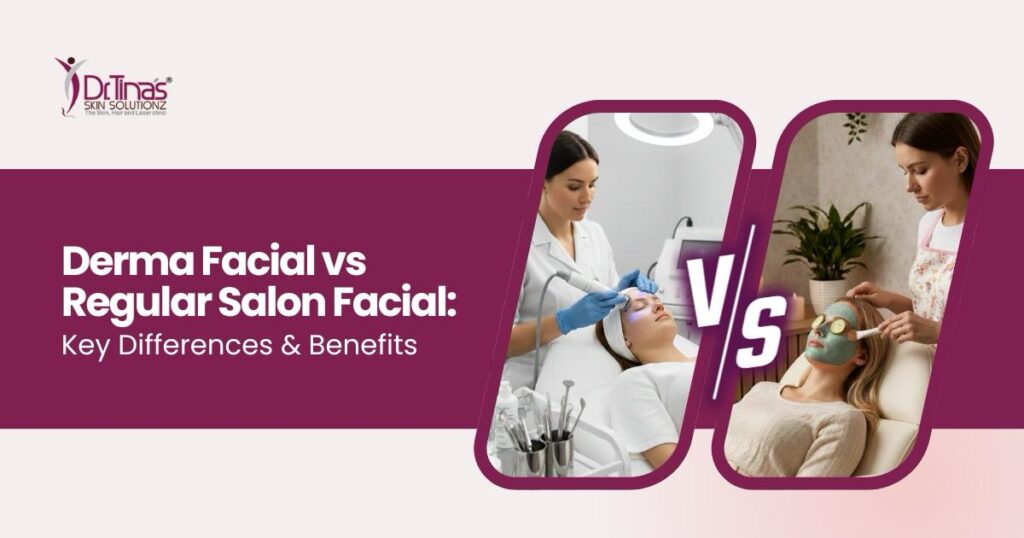
Derma Facial vs. Regular Salon Facial: Key Differences & Benefits
In the quest for glowing skin, the options can be overwhelming. Walk into any high-street salon, and you’ll see a menu full of “Gold,” “Diamond,” and “Fruit” facials. Walk into a dermatology clinic, and the terminology shifts to “Medi-facials,” “Chemical Peels,” and “Laser Toning.”
This growing confusion between medical treatments and cosmetic pampering is more than just semantics it affects your skin’s long-term health. Choosing the wrong option, especially if you suffer from acne, sensitivity, or pigmentation, can do more harm than good.
If you’ve ever walked out of a parlor with a temporary glow that vanished in two days (or worse, resulted in a breakout), this comparison is for you. Here is the definitive guide to understanding the difference between a Derma Facial (Medical Facial) and a Regular Salon Facial.
What is a Derma (Medical) Facial?
A derma facial, often called a “medi-facial,” is a medical-grade skin treatment performed under the supervision of a dermatologist or by trained medical aestheticians. Unlike a standard beauty treatment, it is not a “one-size-fits-all” product kit.
- Medical Supervision: It begins with a diagnosis of your skin type and specific concerns.
- Science-Backed Ingredients: It uses medicinal concentrations of active ingredients like Vitamins (A, C, E), Alpha Hydroxy Acids (AHAs), antioxidants, and peptides.
- Advanced Technology: These facials often incorporate devices like lasers, LED light therapy, microdermabrasion, or hydra-dermabrasion tools to penetrate deeper into the dermis.
What is a Regular Salon Facial?
A salon facial is primarily designed for relaxation and superficial pampering. It focuses on the sensory experience—the smell of the products, the pressure of the massage, and the immediate (but often temporary) surface hydration.
- Focus on Pampering: The primary goal is stress relief and a temporary “party glow.”
- Standardized Kits: Most salons use pre-packaged kits (cleanser, scrub, cream, mask) that are used on every client, regardless of unique skin conditions.
- performed by Beauticians: The staff are skilled in massage techniques but generally lack medical training in skin anatomy or pathology.
Step-by-Step Breakdown: The Experience
The Derma Facial Experience
- Diagnosis: A dermatologist analyzes your skin barrier, hydration levels, and issues like acne or sun damage.
- Clinical Cleansing: Uses pH-balanced medical cleansers rather than generic soaps.
- Targeted Exfoliation: Instead of abrasive physical scrubs, clinics use chemical peels or enzymatic exfoliants that dissolve dead skin without micro-tears.
- Treatment/Device: This is the core difference—application of lasers for pigmentation, microneedling for scars, or LED lights for acne control.
- Restoration: Application of barrier-repair serums and medical-grade sunscreen.
The Salon Facial Experience
- Cleanse & Steam: Standard cleansing followed by steam to “open pores.”
- Physical Scrub: often involves apricot or walnut scrubs which can be harsh and cause micro-tears in sensitive skin.
- Extraction: often performed manually, which can lead to scarring if done aggressively.
- Massage: A long cream-based massage (often 15-20 minutes). Note: Heavy creams can clog pores in acne-prone skin.
- Face Mask: A peel-off or clay mask usually containing fragrances or superficial bleaching agents.
Key Differences at a Glance
| Feature | Derma Facial (Medi-Facial) | Regular Salon Facial |
| Performed By | Dermatologists or Medical Aestheticians | Beauticians / Therapists |
| Primary Goal | Treat skin concerns & long-term health | Relaxation & temporary surface glow |
| Customization | 100% tailored to diagnosis | Low (Pre-set kits used) |
| Depth of Action | Deep (Dermis layer) | Superficial (Epidermis layer) |
| Active Ingredients | Medical-grade acids, retinoids, vitamins | Fragrances, essential oils, mild creams |
| Acne Safety | Safe (often treats acne) | Risky (Massage can spread bacteria) |
| Technology | Lasers, LED, Hydra-dermabrasion | Steamer, basic galvanic tools |
Benefits of a Derma Facial
The shift toward medical facials is driven by results. Because they work at the cellular level, the benefits extend far beyond the day of the treatment.
- Targeted Treatment: effective for specific medical concerns like rosacea, active acne, stubborn pigmentation (melasma), and fine lines.
- Cellular Renewal: Techniques like microdermabrasion and chemical peels stimulate collagen production, leading to tighter, younger-looking skin over time.
- Safety: For sensitive skin, the risk of reaction is minimal because the products are non-comedogenic and free from harsh irritants like perfumes or bleaches.
Benefits and Limitations of a Salon Facial
Salon facials have their place, primarily in the realm of self-care and mental well-being.
- Pros: They are excellent for de-stressing. The massage improves lymphatic drainage, reducing puffiness temporarily. They are also generally more accessible for a quick pick-me-up.
- Cons: The “glow” usually lasts only 24-48 hours. The heavy use of cream massages can be disastrous for oily skin, leading to “facial acne” breakouts a few days later.
Who Should Choose Which?
Choose a Derma Facial if:
- You have active acne, acne marks, or open pores.
- You suffer from pigmentation, uneven skin tone, or melasma.
- You are looking for anti-aging benefits (wrinkle reduction, skin tightening).
- You have sensitive skin that reacts to store-bought products.
Choose a Salon Facial if:
- You have “normal,” clear skin with no underlying issues.
- You just want to relax and be pampered for an hour.
- You need a quick, superficial hydration boost for an event the next day (and have tested the products before).
Cost, Frequency, and Expectations
- Pricing: The cost can vary depending on the type of facial and the technology involved. For accurate details and personalized recommendations, it’s best to contact Dr Tina Skin Solutionz directly.
- Frequency: Because medi-facials affect cellular turnover, they are usually recommended once every 4 to 6 weeks.
- Expectations: Don’t expect a greasy shine after a derma facial. Expect skin that feels “breathe-able,” clean, and hydrated. The real visual results (like reduced spots or brightness) often peak 3-5 days after the session as the skin heals and renews.
The Role of Expert Clinics: A Look at Skin Solutionz
The success of a medical facial relies entirely on the expertise behind the diagnosis. This is where specialized clinics distinguish themselves from generic chains.
For instance, at Skin Solutionz in Bangalore, the approach is strictly evidence-based. Led by Dr. Tina Ramachander, the clinic integrates medi-facials into broader treatment plans rather than selling them as one-off “beauty fixes”.
When you visit a clinic like Skin Solutionz, the process doesn’t start with a menu card; it starts with a consultation. Whether it’s using advanced laser toning for pigmentation or specific enzymatic peels for sensitive skin, the protocol is customized. This ensures that a client with acne never receives a heavy oil massage, and a client with dry skin receives deep hydration rather than harsh exfoliation.
Bridging the gap between medical dermatology and aesthetic care allows such clinics to offer safe, effective treatments that a traditional salon simply cannot replicate.
Conclusion: Choose Skin Health Over Temporary Glow
The difference between a salon facial and a derma facial is not just about luxury or price, it is about whether your skin is being treated or merely masked. While salon facials may offer relaxation and a brief radiance, derma facials are designed to correct, protect, and strengthen the skin from within. For concerns such as acne, pigmentation, sensitivity, or premature aging, medical-grade facials guided by dermatological science provide far more predictable and sustainable results.
Clinics like Skin Solutionz in Bangalore approach facials as part of a broader, evidence-based skin strategy rather than a one-size-fits-all ritual. This means every facial is aligned with your skin’s condition, lifestyle, and long-term goals, reducing risks while maximizing real improvement.
If you have been struggling with recurring breakouts, uneven tone, or skin that never seems to settle despite regular facials, it may be time to shift from cosmetic treatments to clinically guided care. A professional skin assessment and a properly planned derma facial regimen can be the turning point between temporary glow and truly healthy skin.
Your skin deserves solutions not just treatments.
FAQs about Derma vs. Salon Facials
1. Can a derma facial replace my daily skincare routine?
No. A derma facial boosts your skin’s health, but you still need a daily routine (cleanser, moisturizer, sunscreen) to maintain the results.
2. Is a derma facial painful?
Most are painless. Some treatments like extractions or mild chemical peels may cause a slight tingling sensation, but they are generally very comfortable.
3. Will my face look red after a medical facial?
It depends on the intensity. mild medi-facials have zero downtime, you can go back to work immediately. Deeper treatments might leave a mild pinkness that subsides in a few hours.
4. Are salon facials bad for you?
Not necessarily, but they can be risky. If the hygiene is poor or the products are too harsh (like bleach), they can damage the skin barrier. Always check the products being used.

Dr.Tina Ramachander is one of the best dermatologist in Bangalore and Medical Director at Dr.Tina’s Skin Solutionz, a skin care clinic in Bangalore. She completed her master’s in dermatology from the well acclaimed JJM Medical college in Karnataka and is now a practicising dermatosurgeon and Medical Cosmetologist in Bangalore.