The Truth About Tiny Black Dots on Your Nose and How to Treat Them
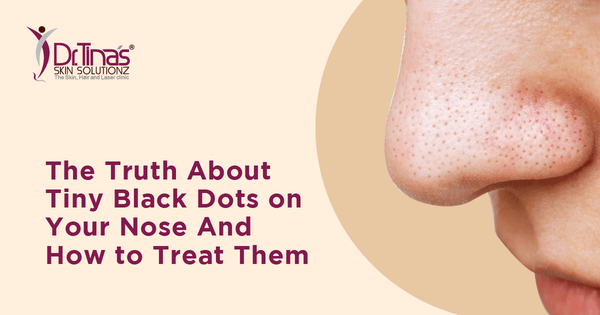
Wondering what to do about the bristly black dots lining your nose and facial contours? Guess what ?
They might not be the dreaded blackheads, hard to uproot and much too prominent to be concealed. You are probably on the wrong track removing them with an extractor.

These dark little bumps are neither blackheads nor acne – but sebaceous filaments that are there somewhere on the same spectrum.
If you’ve been wondering how to remove black dots or dark spots on your nose, you’re not alone. Many people confuse these tiny black dots known as sebaceous filaments with blackheads or acne. Understanding the difference is the first step to treating black spots on the nose the right way and preventing irritation or scarring.
So, step away from the looking glass and keep reading before attempting to draw them out wrong.
Black Dots vs. Blackheads: What’s the Real Difference?
People often use “black dots” and “blackheads” interchangeably, but medically, they’re not the same.
Sebaceous filaments are part of your skin’s natural oil regulation system, while blackheads are a form of acne caused by blockage and oxidation of oil plugs.
Here’s a quick visual comparison to help you tell the difference:
| Feature | Sebaceous Filaments | Blackheads |
| Color | Gray, light brown, or slightly yellow | Deep black or dark brown |
| Texture | Flat or smooth to touch | Raised, rough bump |
| Composition | Natural mix of sebum & dead skin cells | Hardened oil, keratin & bacteria |
| Pore Opening | Always open (normal structure) | Clogged or partially closed |
| Extraction Result | Returns quickly – it’s part of the pore | Can be removed but may recur |
| Treatment Focus | Oil control & exfoliation | Extraction & acne treatment |
So, if you’ve been wondering how to remove black dots or dark spots on your nose, the first step is recognizing what you’re dealing with. Trying to extract sebaceous filaments aggressively can enlarge pores or cause irritation.
What Causes Sebaceous Filaments on Skin?
Unlike acne, sebaceous filaments do not have plugs, allowing oil to freely travel to the surface of your skin. Caused mainly from oil, dirt, and dead skin cell buildup, sebaceous filament formation is often aggravated by warm weather.
Other factors causing sebaceous filaments are as follows —
Genetic Traits
In most cases, heredity determines skin pore size which becomes a factor causing sebaceous filaments to form and grow.
The largest dermal openings are found on top of the nose, the outline of the upper lip and chin area, as well as sometimes over the eyebrows.
Advancing Age
With advancing age, skin collagen is increasingly lost, making skin lose its elasticity and strength.
This causes existing pores to enlarge and emerge into sebaceous filaments. Along with other signs of skin ageing, sebaceous eruptions render facial skin lusterless and flawed. You may experience more of this if you have oily skin.
Unchecked Sun Exposure and pollution
Spending significant amounts of time in the sun and dust , especially without protective sun block cream causes proneness to sebaceous filament outbreak.
This happens due to excessive sweating from heat, triggering dermal lubrication.
Must Read : How To Choose The Right Sunscreen For Your Skin – Tips From Dermatologist
Stocky Hair Follicles
As in the case of genetics-determined large skin pore, some individuals may also have thick facial hair roots. Stocky follicles tend to collect oil and accumulated dirt, increasing the occurrence of sebaceous filaments on face, neck, and other parts.

Prevention & Cure
Sebaceous filaments have a real purpose for distributing oil in your skin, keeping it glowing, youthful, and pleasantly taut.
However, you need to keep a balance in dermal oil secretion to keep skin pores contracted and prevent facial skin from growing clusters of unseemly black dots.
Here are some common practices to maintain a check on sebaceous filaments from early on –
- Keep cooling alcoholic free wet wipes handy when going out in non-air conditioned places. Wipe your face gently when beaded with sweat. Salicylic acid and glycolic acid based wipes also help.
- Apply non-comedogenic skincare products, be it moisturisers, makeup, or cleansers.
- Avoid using alcohol-based cleansers or serums.
- Try using a gel-based moisturizer to keep your skin hydrated without getting oily.
Individuals with oily skin might still be experiencing formation of these filaments, in which case, consult a dermatologist in Bangalore regarding medically applying the following chemical components in your skincare products –
Salicylic Acid
An effective agent for reducing facial oiliness, this acid treatment will remove sedum from deep inside the skin pores. As a result, you may still grow filaments but those would not be noticeably as prominent. In addition, the acid will loosen accumulated dirt from dermal pores and make your skin feel squeaky clean and fresh!
This chemical is available without a medical prescription but it is highly advisable to get a prescribed dosage from a dermatologist. Skin type and associated conditions are crucial factors that must be taken into account when deciding on the right strength of this chemical preparation.
Besides use in gel moisturisers, soaps, skin patches, or shampoos, salicylic acid may also be dermatologically administered in peel treatment. With Salicylic Acid chemical peel treatment, expect deep exfoliation of surface layers wherein the surface skin sheds away or peels, followed by cell regeneration and glowing rejuvenation.
Benzoyl Peroxide
An ingredient often effectively used for acne treatment, also works on filaments of sebum. Caution – ointments containing this chemical may dry your skin and significantly limit oil production. But in the process, skin pore size would be reduced and the pores would be cleared from the deep down.
Benzoyl peroxide, whether prescribed in ointments or administered with a chemical peel, is best applied under the guidance of dermatological experts. Considering your skin type, age, and other associated factors, the concentration of the product may be regulated to protect your skin from hyper-dryness and peeling.
Tea Tree Oil
Rejuvenating essential oils are often found to regulate oil content in skin without causing dryness. Empowered with the benefits of antifungal, antibacterial, and antioxidant properties, tea tree oil is ideal for topical application on skin where the sebaceous filaments are raising their heads.
Tea tree oil available 100% undiluted and it is advisable to take the opinion of a dermatologist as to how much of the oil should be used in your day to day care products.
In conclusion, don’t forget to protect your skin from long hours in the sun and do the other needfuls to keep dermal pores manageably smaller in size. Sebaceous filaments remain undetectably tiny if your skin care routine is accurate and well maintained.
Tretinoin and Adapalene
These molecules help with breaking down the plugged oil gland and reduce the secretions.
Adapalene helps in reducing the inflammation. Used for treating early acne, it unblocks pores, treats blackheads and whiteheads. Tretinoin also helps in minimizing the size of the pores and boosting exfoliation, clearing the pore debris and allowing them to go back to their normal size.
Use it under dermatologist advise, since it can be harsh if not used the right way.
Q-switched laser for the pigmented hair
Fine hair on the nose can be reduced by using the pigment lasers, this leads to clearer skin on the nose .
Dermatologist-Approved Ingredients at a Glance
| Ingredient | Recommended Strength | How It Helps | Caution |
| Salicylic Acid (SA) | 0.5–2% | Clears pores, reduces oil, smoothens skin texture | Avoid overuse; can dry skin |
| Benzoyl Peroxide (BP) | 2.5–5% | Fights acne bacteria, clears debris | May cause peeling; fabric bleaching |
| Retinoids (Adapalene / Tretinoin) | 0.025–0.1% | Boosts exfoliation, minimizes dark spots | Use sunscreen; start gradually |
| Tea Tree Oil | ≤5% dilution | Natural antibacterial & antifungal | Patch test for sensitivity |
| Niacinamide (optional) | 5% | Brightens dark spots on nose | Safe for daily use |
Ready to Get Rid of Those Tiny Black Dots the Right Way?
If you’re tired of trying to extract or cover up black dots on your nose, SkinSolutionz, Dermatology Clinic at Bangalore can help.
We combine medical expertise with advanced skincare treatments to safely refine pores, balance oil, and brighten your skin tone.
Frequently Asked Questions (FAQs)
1. Are black dots on my nose blackheads or sebaceous filaments?
In most cases, those tiny black dots on the nose are sebaceous filaments, not blackheads.
Sebaceous filaments are part of your skin’s natural oil system they help transport sebum to the surface.
Blackheads, on the other hand, are clogged pores that turn black due to oxidation. Sebaceous filaments are normal and return quickly even after extraction.
2. How do I remove black dots or dark spots on my nose permanently?
You can’t permanently remove sebaceous filaments, but you can reduce their appearance with proper skincare.
Use salicylic acid cleansers (0.5–2%), retinoids (Adapalene or Tretinoin), and lightweight moisturizers to refine pores.
If you have dark spots or pigmentation, dermatological treatments like chemical peels, retinoid therapy, or laser toning at SkinSolutionz can help lighten and even out the skin tone.
3. Why do I get black dots on my nose even after cleaning regularly?
Even with regular cleansing, your pores naturally refill with oil and skin cells — that’s their job.
Using harsh scrubs or over-washing can backfire, triggering more oil production.
Focus on gentle exfoliation 2–3 times per week and avoid pore strips or squeezing, which can damage your skin barrier.
4. Can sebaceous filaments turn into blackheads?
Yes, they can.
When excess oil, dead cells, and bacteria clog a pore, a sebaceous filament can harden into a blackhead or whitehead.
Consistent use of salicylic acid, retinoids, and non-comedogenic skincare keeps pores clear and prevents this transformation.
5. Is it safe to squeeze or extract black dots from my nose?
No. Squeezing or picking at pores can cause inflammation, enlarged pores, and even scarring.
Sebaceous filaments will always refill, so manual extraction offers only temporary relief.
Instead, opt for dermatologist-supervised deep pore cleansing or chemical peel treatments for safe, long-term improvement.
6. What’s the best skincare routine for oily skin and black dots in humid weather like Bangalore?
– Cleanse twice daily with a gentle, pH-balanced cleanser.
– Use salicylic acid toner or pads 2–3 times weekly.
– Moisturize with a gel-based, oil-free product.
– Apply SPF 30+ sunscreen every 3–4 hours outdoors.
– Avoid alcohol-based products that over-dry and trigger more oil.
Following this routine helps control shine, refine pores, and prevent visible black dots.
7. When should I see a dermatologist for black dots or dark spots on my nose?
If your black dots are persistent, inflamed, or accompanied by pigmentation that doesn’t fade after a few months, it’s time to visit a dermatologist.
At SkinSolutionz, our experts can assess whether you’re dealing with sebaceous filaments, blackheads, or post-acne pigmentation and design a treatment plan including chemical peels, retinoids, or laser therapy suited to your skin type and climate.

Dr.Tina Ramachander is one of the best dermatologist in Bangalore and Medical Director at Dr.Tina’s Skin Solutionz, a skin care clinic in Bangalore. She completed her master’s in dermatology from the well acclaimed JJM Medical college in Karnataka and is now a practicising dermatosurgeon and Medical Cosmetologist in Bangalore.